Renegade coming 22nd August 2026 — Pre-order on Amazon!


37 Bags Later: Unearthing the Real Ashton RFC Field
From "ancient" 15-year-old plastic to modern vape waste, the restoration of Ashton RFC field is a deep-dive into the reality of litter. Discover why removing 37 bags of rubbish is a 500-year win for the planet and how "small" actions are the only thing protecting our local wildlife from toxic neglect.
C Pintilie
5/3/20264 min read
37 Bags Later: Unearthing the Real Ashton RFC Field
"Good luck, you'll be here for days."
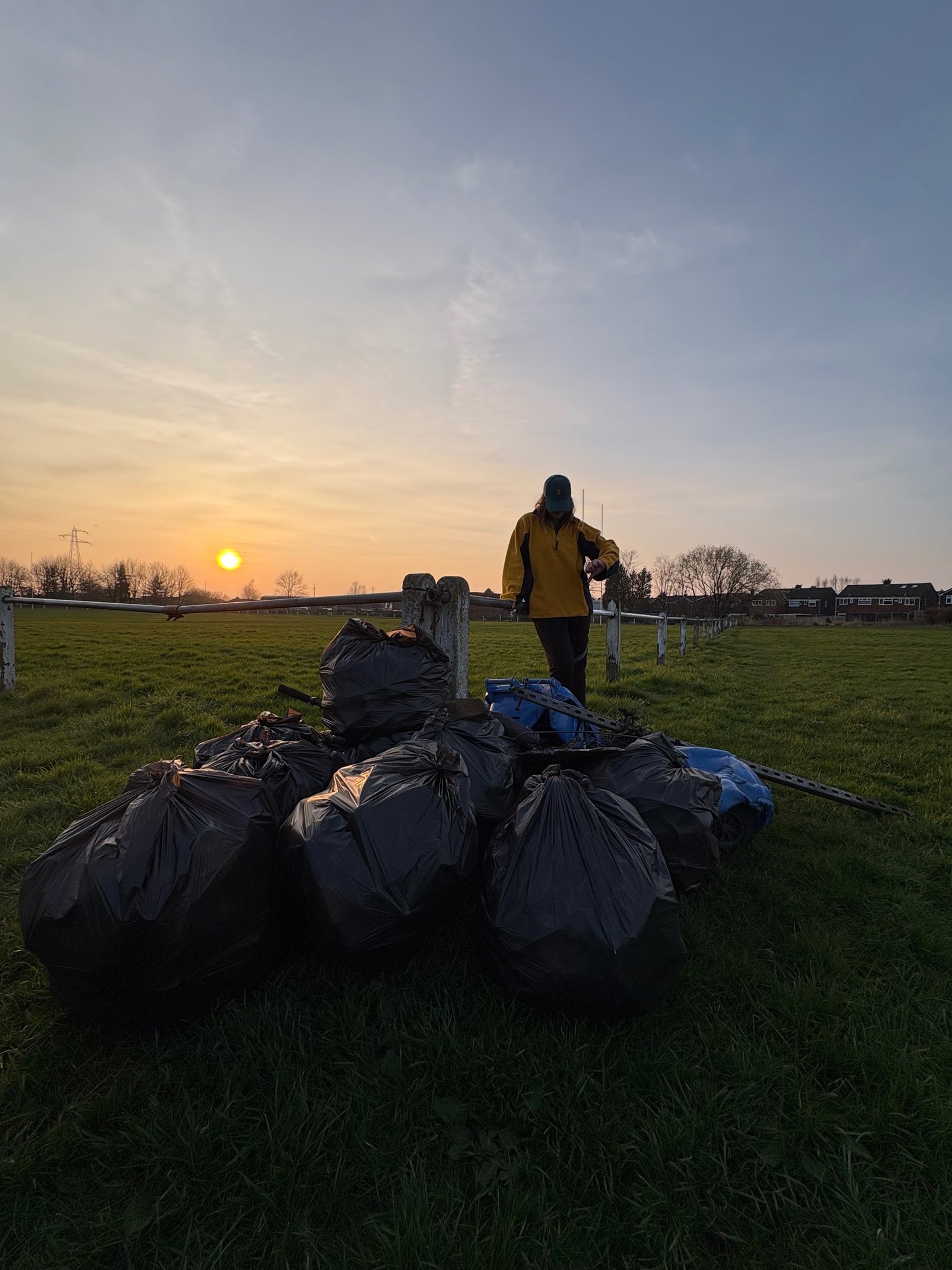
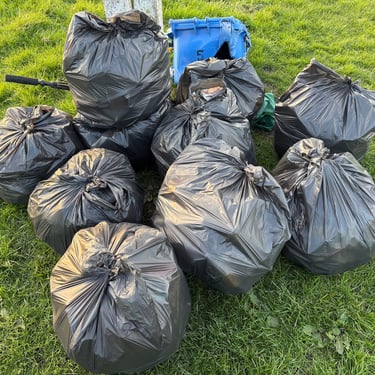
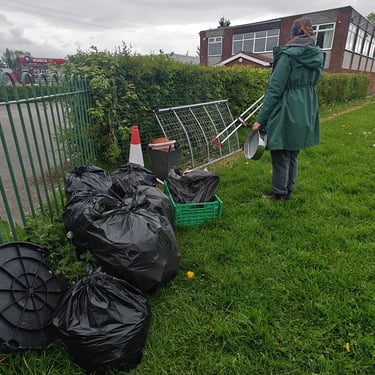
That’s what an older lady told me on my very first day out here on the field. She was right about the effort, but she severely underestimated the timeline. I've been at it for weeks, and we've just crossed a massive, exhausting milestone: 37 bin bags of rubbish.
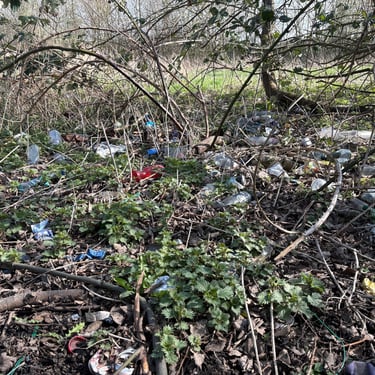
Let me paint a picture of what 37 bags of "ancient" and modern trash actually looks like. It’s not just stray crisp packets. We’ve hauled out plastic bottles, glass bottles, food wrappers, school supplies, shoes, clothes, backpacks, vape pens, and jewellery. But it gets weirder and heavier: I've dragged out a melted wheelie bin, a metal fence panel, a clothes horse, several metal poles, a sofa cushion, a tarp, a tent with camping supplies, a traffic cone, a microwave, a printer, plastic plant pots, a milk crate, and—ironically—fake plastic garden plants.
Some of this rubbish has been buried in the soil for 10 to 15 years or more.
The Epicenter of the Mess
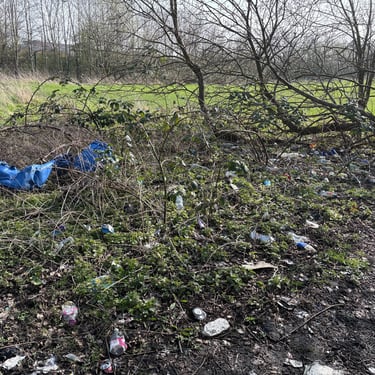
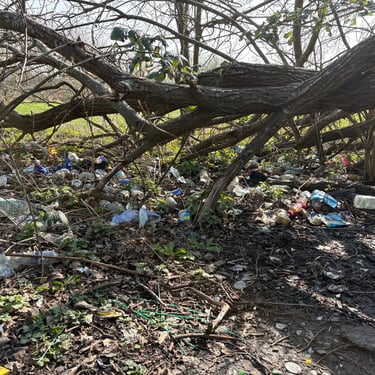
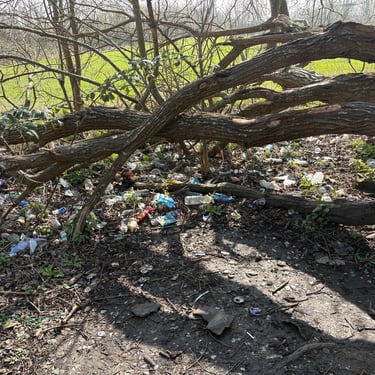
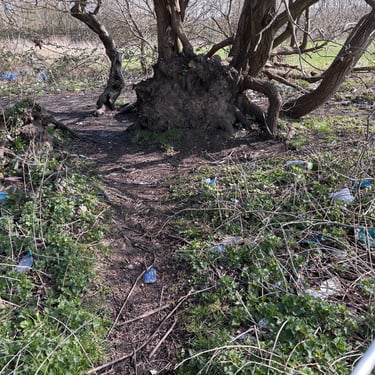
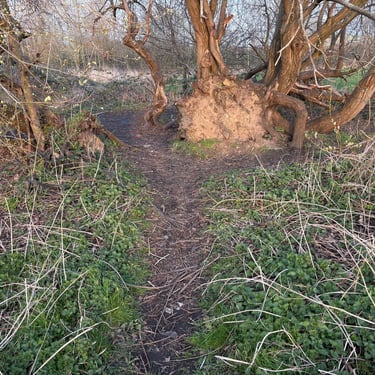
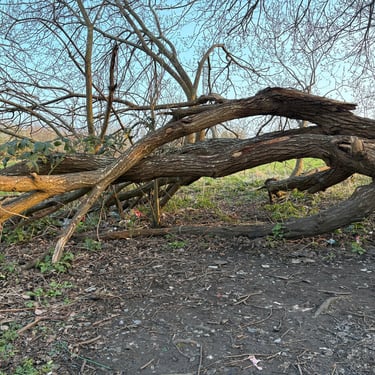
The absolute worst spot is beneath the big tree at the back. It’s a known hangout spot for drinking, drugs, and sex, and the ground tells the story. There are literally layers of crap compacted into the earth, topped with a heavy blanket of broken glass that I am painstakingly sieving out of the soil by hand. I pulled 10 to 15 bags just from beneath that tree.
And yet, it often feels like taking one step forward and two steps back. Every time I go, new things have been dropped. Today’s newest addition? A disposable BBQ left on the grass from the recent burst of sunshine, sitting right next to a carrier bag full of fresh rubbish.
The Collateral Damage
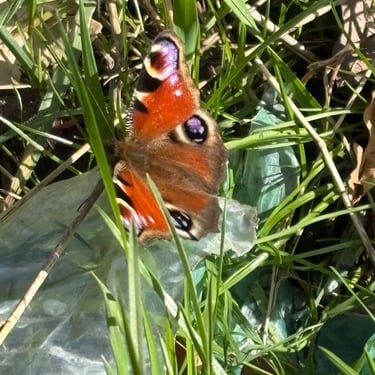
The impact this has on the local ecosystem is heartbreaking to see up close. Recently, while digging up buried plastic, I uncovered a colony of worms trapped inside a plastic bag. They were skinny, starving, and totally cut off from the soil they needed to survive. I managed to free them, but not everything is so lucky. I found a dead jackdaw right next to an empty sweet packet. I buried it beneath lots of grass and plant matter at the fence line to give it some peace.
And then there’s the dog poo. To the dog walkers leaving their mess in non-biodegradable bags: this is absolute madness. If you just let your dog poo in the bushes, the rain would wash it away. It's natural! But wrapping it in a plastic bag ensures it stays there forever, creating a toxic, preserved package of waste.
The Apathy of the System
You might wonder, where is the local authority in all this? The council actually owns this land, but they do not reply to messages, and they certainly don't upkeep it.
This apathy extends to the school behind the field (GAA, Dixons Academy). I emailed them about the state of their fence line, but they completely ignored me. I had to escalate the issue to their governance team, who finally passed it to the headteacher (I'm still awaiting a response). This is incredibly important because their side of the fence is covered in similar litter—bottles, cans, food packets, and what looks like a rusted motorcycle—that I physically cannot reach from my side. Worse, when their fence panels were replaced recently, the old metal panels were just left tangled in the brambles. And I have literally watched their students dropping snack packaging on the ground as they walk through the field.
It’s not just the kids, though. Adults visiting for rugby matches or events constantly leave their crap behind, assuming there is some magical, paid cleaning crew who will deal with it. Newsflash: there is literally no one. Even a filming company used the field recently and just left their red tape behind in the grass.
The Human Element
Amidst all this frustration, there are moments that hit hard. A little girl approached me the other day to ask what I was doing. She said her friend wanted to know but was too scared to ask because, in her own words, "people get violent around here." Think about how sad that is—kids are scared of someone just picking up trash. When I explained what I was doing, she looked at the mess and asked a perfect question: "Who would leave their glass behind?"
Exactly.
I couldn't do this entirely alone, though. A massive, heartfelt thank you goes to the guy at the Ashton RFC club. Not only does he dispose of the mountains of bags I collect, but he even brought my partner and me drinks as a thank you. He is a legend.
The Harsh Reality of Litter
If you think one dropped bottle doesn't matter, here are the facts of what is happening to our local land:
Plastics don't disappear; they shatter. A plastic bottle takes up to 450 years to degrade. Even then, it doesn't vanish—it shatters into microplastics.
Toxic Soil and Water: These microplastics, along with the heavy metals and chemicals leaching from discarded vapes and batteries, seep into the soil, killing the microorganisms that keep the earth alive. Rain then washes these toxins straight into our local water table.
Wildlife Impact: Animals mistake colourful plastics for food, leading to starvation, or they get fatally entangled in our convenience packaging.
The Broken Window Theory: This is a criminological theory that states visible signs of neglect (like a heavily littered field or broken windows) create an environment that encourages further vandalism and dumping. When a place looks abandoned, people treat it like a dump. When we clean it up, the psychological shift forces people to respect the space.
Small Actions Matter: Taking your rubbish home or simply picking up one stray bottle you see on a walk breaks that cycle. You are literally saving that specific piece of ground for the next 500 years.
We have to do better for the wildlife, and we have to do better for the kids who walk through this field every day. Take your rubbish home.