Renegade coming 22nd August 2026 — Pre-order on Amazon!


Beyond the Plot Checklist: The 3 Holy Grail Books That Changed My Writing Life
Tired of writing advice that leaves your draft feeling flat? Discover the 3 ‘Holy Grail’ books that transformed my writing, world-building, and creative sanity.
WRITING ADVICE
C. Pintilie
5/30/20263 min read
Beyond the Plot Checklist: The 3 Holy Grail Books That Changed My Writing Life
If you spend any time in writing communities online, you’ve probably been bombarded with the same standard advice a thousand times. Use this three-act structure. Hit these exact plot points by page 50. Fix your grammar. Maximize your daily word count.
It’s exhausting. And if you are trying to write stories that feel rich, ancient, and deeply atmospheric, that kind of mechanical advice can leave your rough draft feeling incredibly flat.
When I’m working on my dark fantasy projects, I don’t look at corporate storytelling checklists. I want my worlds to have teeth, my characters to feel raw, and my sanity to stay intact while I navigate my own energy limits.
To do that, I rely on three specific books that have absolutely nothing to do with formatting sentences, but everything to do with mastering the psychological craft of writing. If you want to upgrade your rough draft and save your creative spirit, add these to your shelf immediately.
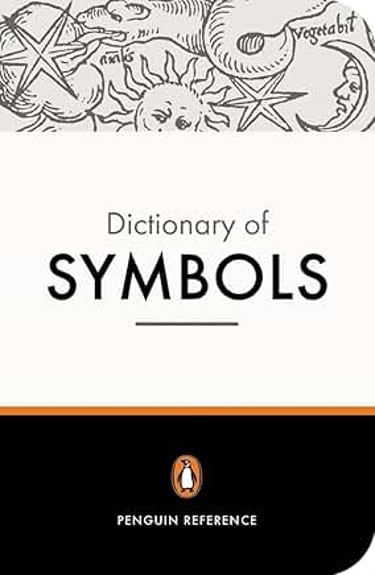
1. The World-Building Secret Weapon: The Penguin Dictionary of Symbols (by Jean Chevalier and Alain Gheerbrant)
If you want your fantasy world-building to feel heavy, layered, and full of secrets—without dumping fifty pages of boring exposition onto your reader—this book is your ultimate cheat code.
The Penguin Dictionary of Symbols is an absolute monolith of human imagination. It doesn't tell you how to build a magic system; instead, it compiles the cultural, psychological, and mythological meanings of almost every image, color, pattern, and gesture across human history.
How I use it: When my characters encounter a specific flower, a geometric carving, or a certain type of metal in a decaying city, I don't just pull it out of thin air because it "looks cool." I look it up here first. By tapping into the collective subconscious weight behind a symbol, you can plant subtle clues directly into your prose. You trigger an involuntary, visceral response in your reader because you are using the ancient visual language of human history. Skip the standard world-building templates and read the dictionary of human imagination instead.
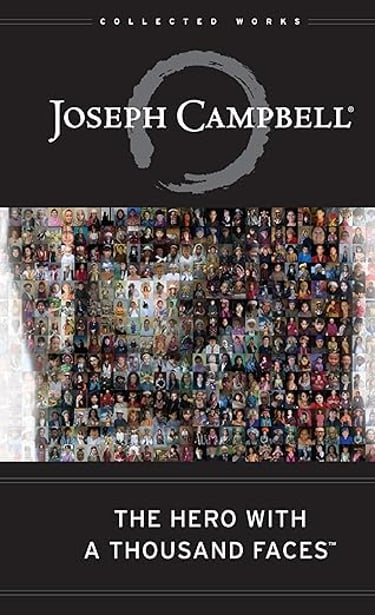
2. The Blueprint for Character Evolution: The Hero with a Thousand Faces (by Joseph Campbell)
Yes, this is the legendary book that inspired Star Wars, The Matrix, and basically all of modern epic fantasy. But somewhere along the line, Hollywood got hold of it and turned the "Hero's Journey" into a clinical, predictable plot checklist.
If your character arcs are feeling formulaic, it’s usually because you are focusing on the external timeline rather than the internal transformation. Joseph Campbell looked at thousands of years of human mythology and realized we are all telling the exact same story—the Monomyth—because it is a blueprint for spiritual survival.
The craft insight: The magic of the Hero's Journey isn't the physical steps like "Crossing the Threshold" or entering a scary cave. It's what those places represent psychologically. When a character descends into the "Belly of the Whale," it’s not just a dangerous mine or a dark forest; it is a psychological death. They are shedding their old ego so they can be reborn into who they need to become to survive a broken world. Stop plotting external checkboxes, and start writing character arcs that echo the ancient loops of human nature.
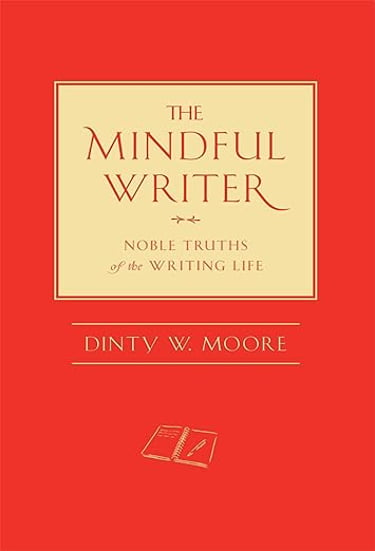
3. The Lifeline for Burnout: The Mindful Writer: Noble Truths of the Writing Life (by Dinty W. Moore)
As a dark fantasy writer who has to consciously manage my own health and energy limits, my relationship with productivity can get toxic incredibly fast. The internet loves to tell us that if we aren't writing 2,000 words a day, we aren't "real" writers. It’s a fast track to severe creative burnout.
The Mindful Writer completely flipped the script for me. It isn't a textbook on plot mechanics; it’s essentially a spiritual guide for surviving the psychological toll of being a creator.
The lesson that saved my sanity: Moore uses basic principles of mindfulness to show us that the crushing dissatisfaction and anxiety we feel during a rough draft usually doesn't come from our words—it comes from our ego trying to force total control over the process. This book teaches you how to detach your personal self-worth from your daily word count, embrace the messy magic of the present moment, and protect your spirit while building your world. It is a low-pressure, deeply grounding sanity check that every indie author needs on their desk.
We don't need more rules on how to format a story; we need tools that help us dig deeper into human nature and protect our creative energy while we do it. These three books form the absolute foundation of how I approach my own writing and the themes in my upcoming debut novel.