Renegade coming 22nd August 2026 — Pre-order on Amazon!

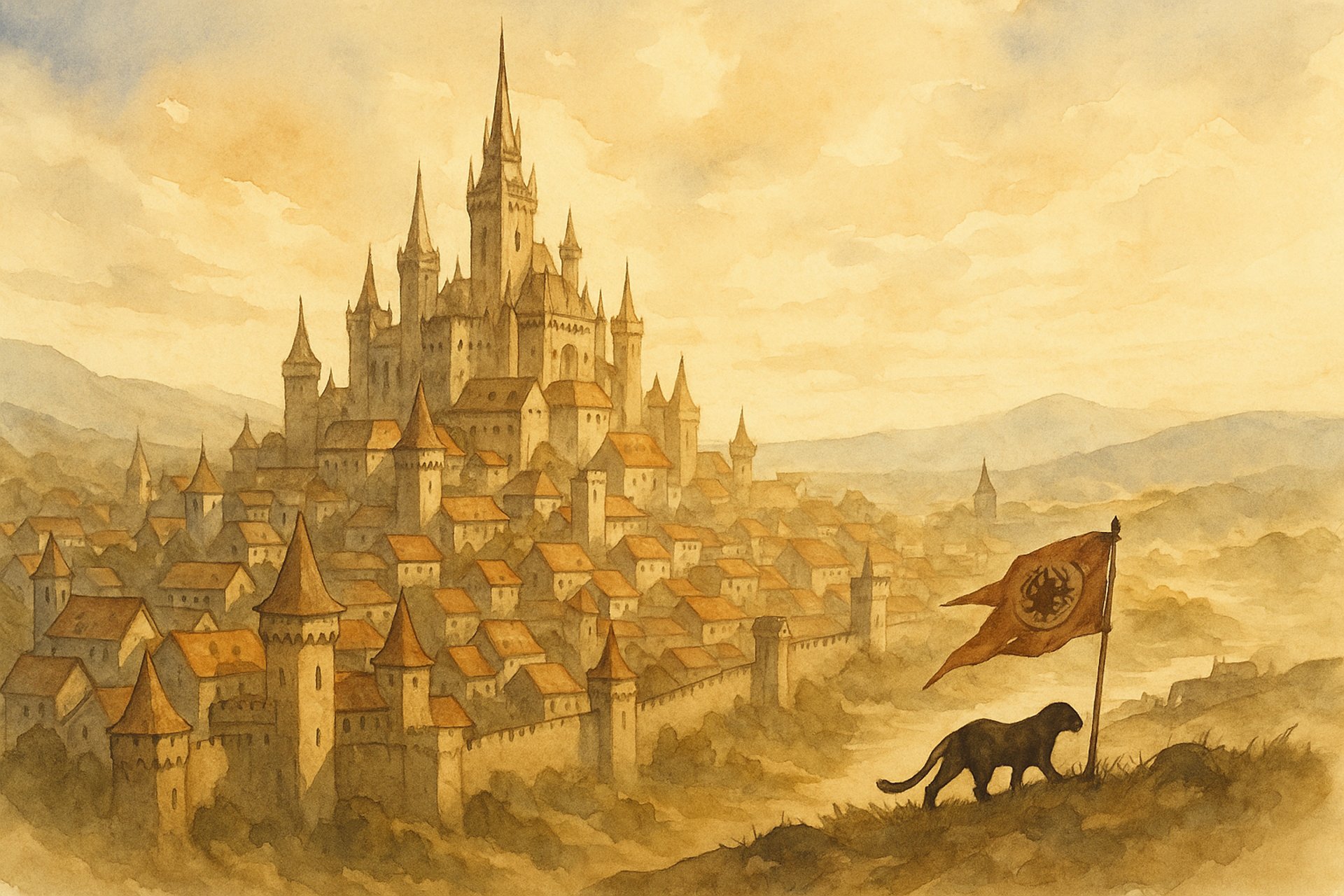
The Imperial Capital: Cedarstone
Deep-dive into a masterclass of fantasy world-building. This Magnushire Division entry covers the history, geography, and socio-political climate of Cedarstone Capital. From the Great Green Laws to the Living Ledger, see how an empire erases its past to build a "Standard" future. Perfect for fans of political fantasy and dystopian lore.
THE ORBIS ARCHIVES
C. Pintilie
5/13/20264 min read
“To understand the Capital is to understand the relentless rhythm of the hammer against the stone.”
In this installment of our archival deep dives into the pillars of Orbis, we turn our gaze toward the clinical efficiency of Cedarstone. While the South contemplates the infinite void and the North battles the ancient frost, the people of the Midlands exist in a state of perpetual momentum. They call it the Doctrine of the Living Hand—a path that seeks progress through the systematic erasure of the past.
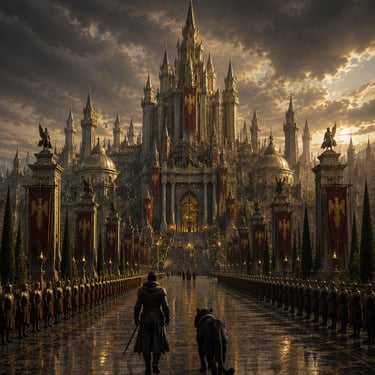

Cedarstone:
The State Capital
Status: Primary Administrative Capital & Imperial Seat
Linguistic Compliance: 100% Standardised Shirespeak (Mandatory)
Governance: General Vortigen, The Infallible Strategist
I. GEOGRAPHIC COORDINATES & SITE OVERVIEW
Cedarstone stands as the oldest settlement in the Midlands, serving as the historical "Eye of the Realm." Situated on the precipice of the Bleakwaters (the East Coast Ocean), the city is a masterclass in modernisation and defensive architecture.
Surroundings: Bound to the west by the Cedar Grassland, to the north by the Crudus Wilds, and anchored by the freshwater expanse of Cedar Lake.
The East Wharf: A massive deep-water port and processing hub. It is the primary artery through which the wealth of the grasslands—grain and livestock—is processed, milled, or butchered for imperial export.
The Crown Forest: A strictly managed woodland to the north. Under the Great Green Laws, this forest is reserved for the cultivation of straight-masted oaks for the Imperial Navy and palace structural beams.
II. URBAN ZONING & INFRASTRUCTURE
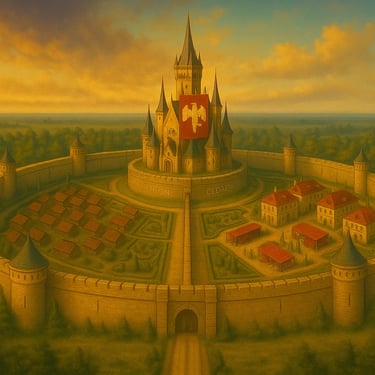
The city is bifurcated into two distinct zones, representing the transition from the "Labor of the Past" to the "Vision of the New Age."
The Old Town (The Foundation)
Densely populated and perpetually humming with industrial output.


Residential: Overcrowded terraced housing and workhouses for the laboring classes.
Commerce: The Common Marketplace and local trade businesses.
Security: The eastern outskirts are home to the primary Jailhouse and the High-Security Prison, ensuring immediate containment of industrial subversion.
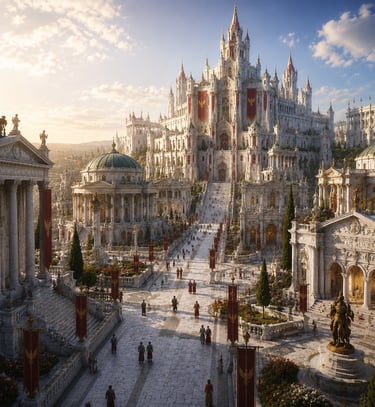
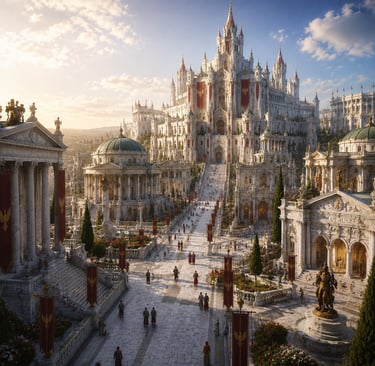
The New Town (The Imperial Heart)
The epicenter of aristocratic and state-mandated culture.
Landmarks: The Town Hall, Grand Library, museums, and high-end leisure/bathhouses.
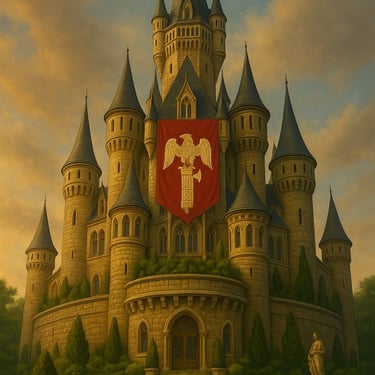
The Citadel: The main castle, restored to peak grandeur after the "Purge Fire" during the Monarchy’s fall. It stands as a symbol of the New Age.
Leisure: The Post-Market, manicured parks, and the Stadium for military displays.
ARCHIVE NOTE: Northern-facing windows across all districts are fitted with heavy, wind-resistant stone shutters. This is a response to the "Mountain Gales"—fierce northern winds superstitiously believed to carry spirits from the peaks. The State maintains these shutters as a practical defence against weather, discouraging "spiritual" interpretations.
III. HISTORICAL TIMELINE: THE EVOLUTION OF ALIGNMENT
The Convergence Era: Originally a neutral trade zone where the disparate cultures of the mountains, grasslands, and sea met to exchange resources without hostility.
The Siege of the Sunken Shore: During an ancient naval blockade, the city survived by retreating its resources to Cedar Lake, establishing the "Dual-Crest" culture (Sea Port vs. Lake Garden).
The Timber Tensions: Deforestation led to the Great Green Laws, mandating the use of white stone and marble, giving Cedarstone its distinct "Whitewashed" aesthetic.
The New Dawn: The removal of the rotting monarchy by General Vortigen. This era marked the transition from "Divine Right" to "Strategic Necessity."
IV. STATE IDEOLOGY: VITALITY & VIGILANCE
Under General Vortigen, the "Infallible Strategist," the outdated worship of the dead has been eradicated in favor of the State Cult of Vitality.
The Doctrine of the Living Hand
Every citizen’s value is measured by their current output. The State is the Provider; the citizen is the Tool.
The Festival of First Light: A mandatory gathering at the docks to watch the sun rise over the Bleakwaters, reaffirming the Capital’s role as the herald of the new day.
The Day of the Forge: Replacing religious holidays, this is a day of mandatory military and industrial parades.
The Bureau of Lineage
The "Church of Bones" has been dismantled. In its place, the Living Ledger is the only valid record of a family’s existence.
Service Records: Families must maintain a State Ledger detailing their contribution to the Empire. Upon death, the ledger is closed.
Status Shifts: A "Poor" ledger record results in the immediate drop of family status and reassignment to Old Town workhouses.
V. PUBLIC ORDER & COMPLIANCE
Purity Circles: Neighborhood groups are collectively responsible for the loyalty of each member. If one "strays," the entire circle faces reassignment.
Self-Criticism Sessions: Mandatory for those caught in "distractions" (lingering thoughts of the Old Ways or Southern Zealotry).
The Savior Narrative: The General is not a god, but the Father of the New Age, the only shield against the "Barbarian North" and the "Heathen South."
Judicial Clarity: To ensure maximum deterrent effect, all executions and punishments are conducted in public squares within the New Town’s peripheral gates.
NOTE (Internal Revision - EXCISE BEFORE PUBLICATION):
The archives record the castle's restoration after a "fire." Local rumors among the elderly in Old Town suggest the fire was set by Vortigen’s own vanguard to mask the slaughter of the Royal Line. The "Silver-Eyed" King was allegedly not "planning a sale to the South," but was executed in his study while holding a rose of sand.
Subscribe for updates on The Legends of Iron Spine
No spam; only one monthly email.