Renegade coming 22nd August 2026 — Pre-order on Amazon!


The Parking Wars: Emotional Dysregulation, the 1940s Workweek, and Why We Are All So Angry
Blog post description.
ADVOCACY & IDENTITY
C. Pintilie
6/10/20264 min read
Coming home should be a safe haven. It is the one place where you are supposed to be able to drop your armor, unmask, and finally breathe. But recently, I experienced a sudden, volatile confrontation right outside my home over something incredibly mundane: a parking space.
Dealing with unpredictable aggression is exhausting for anyone. But as an autistic person, an unprompted confrontation—where personal space and physical boundaries are violently and suddenly crossed—is completely dysregulating. It triggers an intense sensory and emotional overload that takes a massive, lingering toll to process and de-escalate from.
But once the adrenaline faded, I started looking at the bigger picture. Why did this happen?
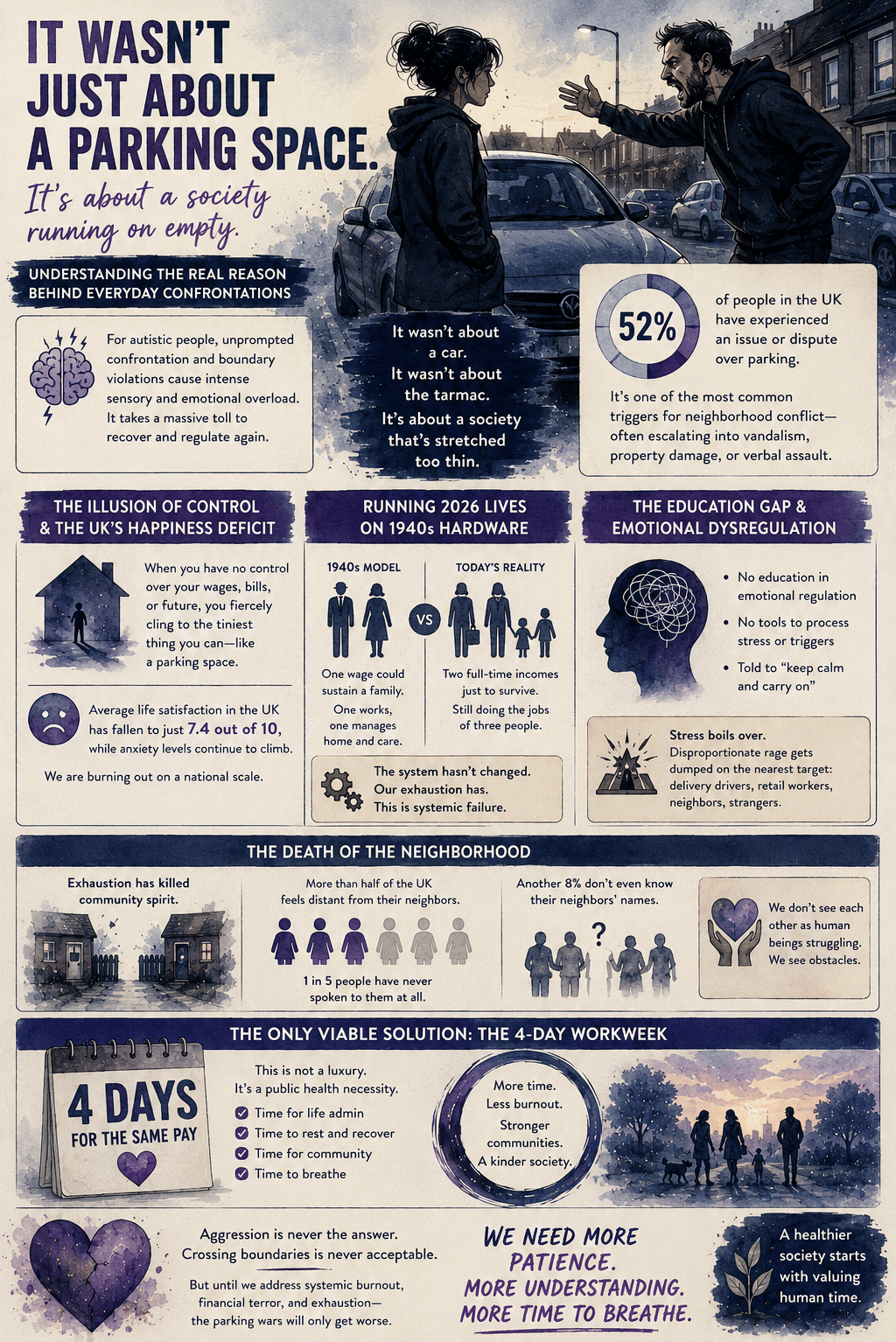
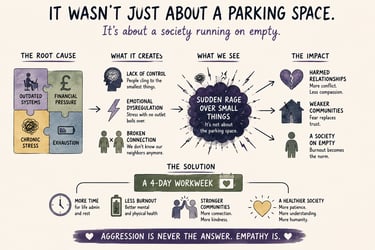
The truth is, this wasn’t really about a car. It wasn't about the tarmac. It was a symptom of a society that is stretched so impossibly thin that people are snapping over the slightest perceived inconvenience.
The Illusion of Control and the UK's Happiness Deficit
We live in a country with a growing population, increasingly limited space, and more drivers on the road than ever before. Logically, friction over space is going to increase. In fact, recent UK surveys show that 52% of people have experienced an issue or dispute over parking, making it one of the absolute most common triggers for neighborhood conflict—and one that frequently escalates into vandalism, property damage, or verbal assault.
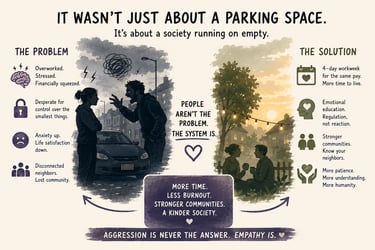
But the rage isn't about logic; it’s about a desperate need for control. Everyone is so overworked, stressed, and financially squeezed that they feel like passengers in their own lives. When you have zero control over your wages, your bills, or your future, human psychology dictates that you will try to fiercely control the tiniest thing you can—like the six feet of public land outside your house.
Territorial aggression is just a trauma response from a population that feels entirely powerless. The Office for National Statistics (ONS) recently highlighted this bleak reality: average life satisfaction in the UK has fallen to just 7.4 out of 10, while anxiety levels continue to climb. We are burning out on a national scale.
Running 2026 Lives on 1940s Hardware
We have to point the finger where it belongs: systemic, government-level failure to update how we live and work.
Right now, we are forcing a modern society to survive on a labour model built in the 1940s. The standard workweek was designed for a fundamentally different economic reality—one where a single wage could comfortably sustain an entire family. In that model, one adult went to work, and the other stayed home to manage domestic care, child-rearing, and the endless "life admin" that keeps a household running. The working adult just had to work.
Today, that financial reality is completely dead. We live in a world where it takes two full-time incomes just to keep a roof over your head and the heating on. Both adults are working 40+ hours a week, but the domestic labour, the life admin, and the caregiving still exist.
We are doing the jobs of three people, and the government refuses to update the system to reflect this. The result is chronic, systemic exhaustion.
The Education Gap and Emotional Dysregulation
When you combine this chronic exhaustion with crushing financial pressure, you get a powder keg. People are one unexpected bill away from ruin, and they are navigating that terror while running on empty.
This is severely compounded by a complete lack of education around emotional regulation. As a society, we are not taught how to process stress, identify our triggers, or de-escalate our own nervous systems. We are just told to "keep calm and carry on."
So, instead of healthy processing, the stress boils over. It erupts as disproportionate rage directed at the Amazon delivery driver, the retail worker, or the neighbor who parked slightly too close to a driveway.
The Death of the Neighbourhood
The saddest casualty of this modern burnout is the complete loss of community spirit.
Because everyone is exhausted and desperately trying to keep their heads above water, we don’t have the energy to know our neighbors anymore. Recent data from the Eden Project Communities reveals a staggering disconnect: more than half of the UK feels distant from their neighbors, and 1 in 5 people have never spoken to them at all.Another 8% admit they don't even know their neighbors' names.
We don't talk over the fences. We don't check in. The neighborhood relationships that used to act as a social safety net have completely dissolved. When you don't know the people living next to you, it is incredibly easy to view them as obstacles or enemies rather than human beings who are struggling just as much as you are.
The Only Viable Solution: The 4-Day Workweek
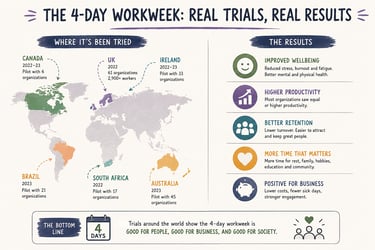
If we want to stop this societal rot, we need a fundamental shift in how we value human time. We urgently need a mandated 4-day workweek for the same pay. This is not a luxury; it is a public health necessity. People physically and psychologically need that extra day to handle their life admin, rest their bodies, and actually participate in their communities. We cannot keep demanding that people give 80% of their waking hours to a system that barely pays them enough to survive, and then act surprised when they lack the emotional bandwidth to treat each other with basic decency.
Aggression is never the answer, and crossing someone's boundaries is never acceptable. But until we address the systemic burnout, the financial terror, and the exhaustion that is driving it, the parking wars are only going to get worse. We need more patience, more understanding, and a society that actually allows us the time to breathe.