Renegade coming 22nd August 2026 — Pre-order on Amazon!

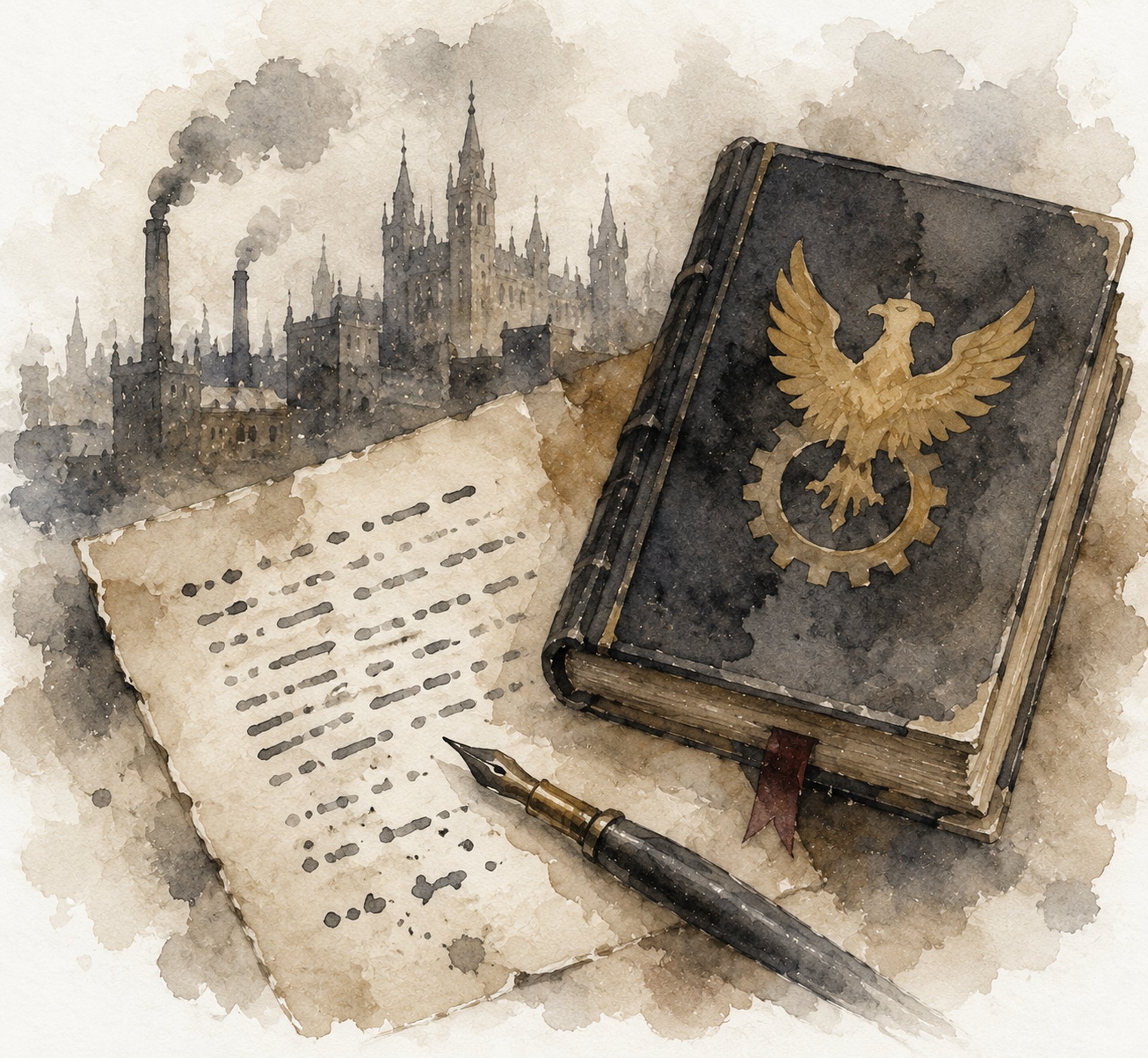
The Sound of Iron: A Deep Dive into Shirespeak
THE ORBIS ARCHIVES
C. Pintilie
5/17/20263 min read
The Sound of Iron: A Deep Dive into Shirespeak
In the modern age of the Orbis territories, one cannot walk a city street, trade a coin, or sign a decree without encountering Shirespeak. Born in the industrial heartlands of Magnushire, this language—often referred to by scholars as the Magna-Tongue—has effectively become the singular voice of the world.
While the ancient Sahrani (the Dawn-Tongue of the southern desert land Solis) once painted the world in flowing, poetic roots, Shirespeak has replaced that warmth with the cold, rhythmic precision of the Midlands. For lore enthusiasts of the Orbis Archives, understanding Shirespeak is more than a linguistic lesson; it’s a study in how power sounds.
1. The Origins of the Magna-Tongue
Shirespeak didn't start as a world language. Originally, it was a collection of Magnic dialects spoken by farmers, millers, and smiths in the central Shires. However, as Magnushire’s influence expanded, so did its vocabulary.
Unlike the triliteral root system of Sahrani, which relies on spiritual and elemental connections, Shirespeak was built for utility. It is a language of the ledger, the law, and the loom. When the Midlands became the dominant global force, they didn't just export goods; they exported the words required to count them.
2. Phonology: Front-of-the-Mouth Sound
If you want to speak Shirespeak like a true citizen of Magnushire, you have to move your voice forward. While southern languages are deep and guttural, Shirespeak is clipped, nasal, and percussive.
Short Vowels: There is no room for the long, echoing vowels of the desert. Words are short, sharp, and designed to be understood over the clatter of a factory floor.
The "Consonant Snap": Shirespeak favors hard endings. Words like track, bolt, and grid hit the ear with a finality that leaves no room for interpretation.
The Standard Dialect: The Magnushire authorities have spent centuries "cleaning" the language, removing regional slang to create The Standard. It is a language that sounds the same whether spoken by a high-ranking official or a low-level guard.
3. Grammar: The Architecture of Rules
Shirespeak is famous (or perhaps infamous) for its rigid syntax. In Shirespeak, the position of a word determines its power.
Subject-Verb-Object: This structure is rarely broken. It reflects the Midland philosophy: someone does something to something else. It is a language of action and consequence.
The Erasure of Ambiguity: While Sahrani might use one word to mean "light," "peace," and "the sun," Shirespeak has fifty different words for "light," categorised by intensity, source, and cost.
4. Shirespeak as a Tool of Empire
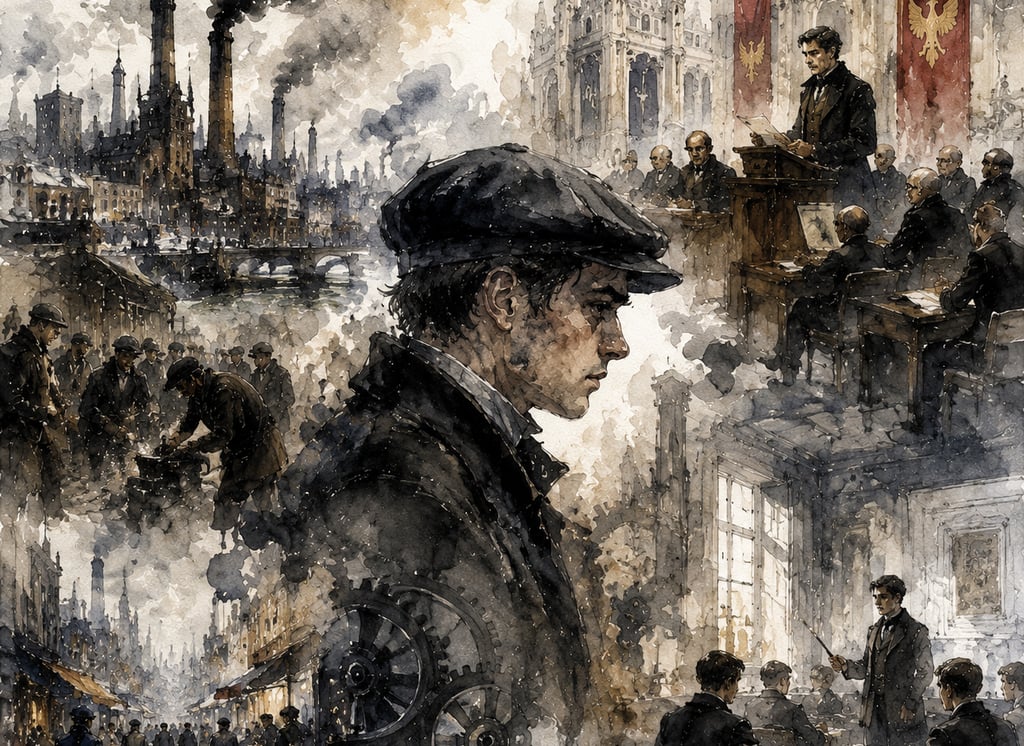
The most striking feature of Shirespeak is its exclusivity. In the Midlands, it is simply called "The Speech." To the people of the occupied territories like Solis, it is the High-Aulic—a mandatory mask they must wear to survive.
By enforcing Shirespeak in schools and government offices, Magnushire has created a world where the "Standard" is the only way to climb the social ladder. If you cannot speak the Shire-tongue with the proper clipped accent, you are marked as an outsider. It is a subtle, linguistic wall that keeps the Midlands at the top of the Orbis hierarchy.
5. Essential Phrases for the Traveller
If you are passing through Magnushire, these common Shirespeak phrases will serve you better than any southern prayer:
"Stand and Account." (The standard greeting from a gate guard).
"The Mill Grinds." (A common idiom meaning "life goes on" or "get over it").
"By the Shire's Weight." (A formal oath, equivalent to swearing on one's life).
"Clear Speech, Clear Trade." (The unofficial motto of the Magnushire Merchant's Guild).
Conclusion:
The Language of the Future?
Shirespeak may lack the ancient beauty of the languages it replaced, but its efficiency is undeniable. It is the language of the machine, the city, and the empire. For the people of the Orbis territories, Shirespeak is no longer just a dialect from a distant Shire—it is the air they are forced to breathe.
As the "Standard" continues to evolve, one has to wonder: in another hundred years, will there be any other voices left to hear?
Do you find the rigidity of Shirespeak comforting or cold? Does the "Standard" help the world move faster, or does it leave too much behind?