Renegade coming 22nd August 2026 — Pre-order on Amazon!

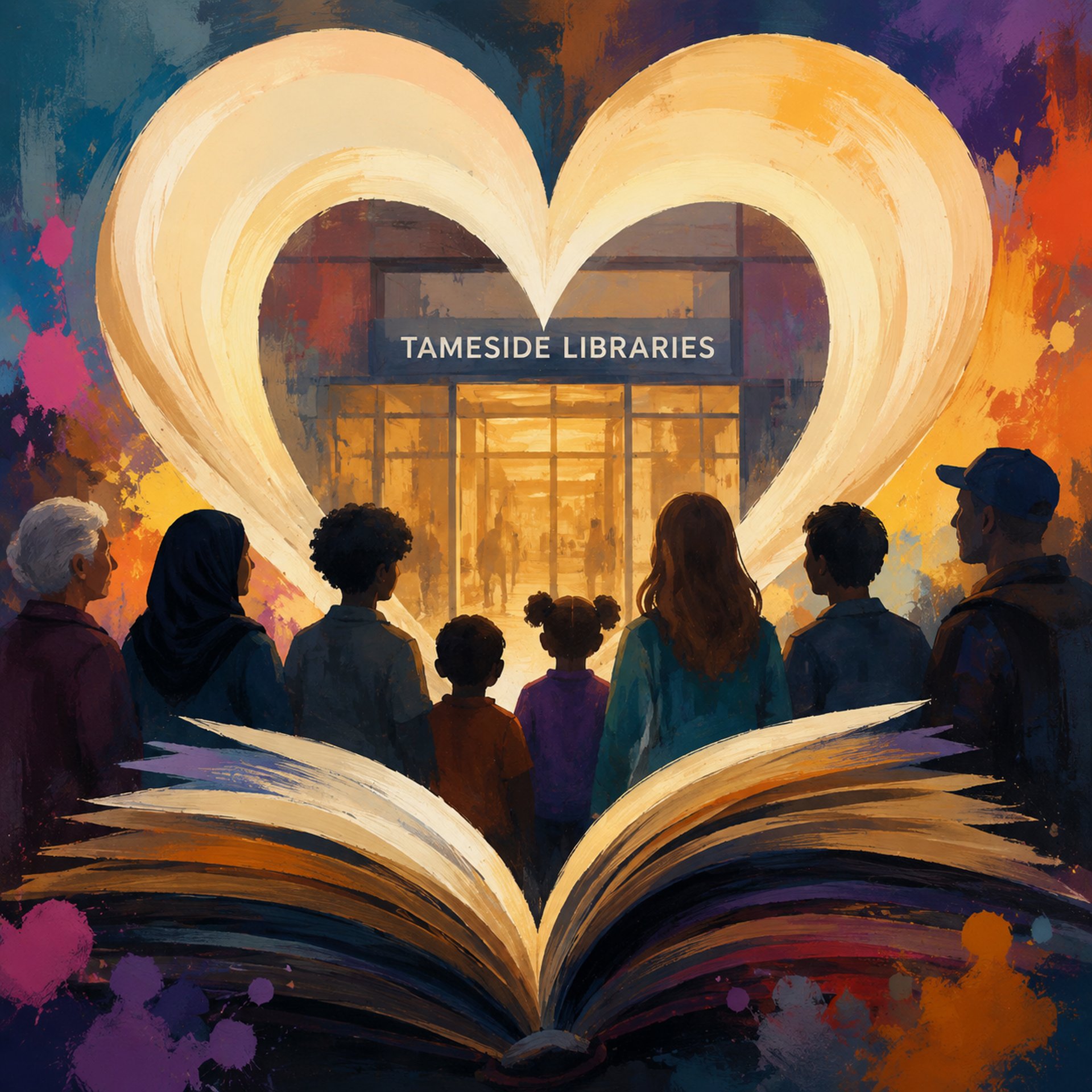
Toddlers in the Temple: What a Library Barmy Taught Me About Modern Britain
A firsthand account of a disturbance at Tameside Libraries. Exploring the difference between patriotism and nationalism, the importance of safe public spaces, and the diverse demographics that define modern Ashton-under-Lyne.
ADVOCACY & IDENTITY
C. Pintilie
5/7/20264 min read
My partner and I arrived at the library around 9:30 AM. It was a classic "deep work" session—laptops open, coffee on standby, and that specific library hum that usually signals collective focus.
But as the hours ticked by, the "quiet sanctuary" of Tameside Libraries started to feel more like a pressure cooker for the worst parts of our current social climate.
The Slow Burn: The TikTok Vortex
It started with four teenagers. They weren't using the computers; they were using the chairs. For four hours, they sat in a "digital vortex," scrolling TikTok on full display while a man next to them struggled to work. It was a masterclass in the "Third Place" crisis—where the library is one of the last free places to exist, but the etiquette of shared space seems to have been lost in the algorithm.
The Explosion: From Plug Sockets to Prejudice
Around 2:00 PM, the atmosphere shattered. A verbal barmy erupted between two grown men over something as trivial as a plug socket. It was loud, aggressive, and laced with the kind of low-effort insults that signal a total collapse of character—one man even resorted to baselessly calling the other a "sex offender" just to "win" the shouting match.
When a member of the library staff—a professional just trying to do their job—intervened, the situation turned ugly. One of the men turned on him with that tired, poisonous refrain: "I'll say what I want, it’s my fucking country, mate."
I’d had enough. I asked them to chill out—reminding them that actual adults were trying to work. For my trouble, I was labelled a "nosy cow." But here’s the thing: if being "nosy" means refusing to let a public space descend into a racist playground, I’ll wear that badge with pride.
The Escalating Front Line
This wasn’t my first time witnessing the library’s peace being shattered. Just recently, I sat at these same desks when a man stumbled in from the street, bleeding profusely from a significant head injury following a fight outside. In that moment, the library transformed from a place of study into a triage center. It is a sobering reflection of our current climate: libraries are no longer just repositories for books; they have become the "front line" for every social fracture in our town. From physical violence spilling through the doors to the verbal violence of the "it’s my country" outburst, our librarians are being forced to act as first-aiders, security guards, and social workers—all while trying to maintain a space that is supposed to be a sanctuary of learning. When we allow aggressive entitlement to take root, we aren't just losing our quiet; we are losing the safety of the only truly open doors left in our community.
Tameside by the Numbers: The Reality of "Our Country"
The man’s claim that it was "his" country was a direct attempt to exclude the staff member based on the color of his skin. But the data tells a different story about who Tameside actually is. According to the 2021 Census:
Growing Diversity: 17.6% of Tameside’s population now comes from an ethnic minority community.
The Global Borough: While 82.4% identify as White British, our streets are made up of Pakistani (3.9%), Bangladeshi (2.5%), and Black African (1.8%) residents, among many others.
Cultural Fabric: After English, the most spoken languages in our homes are Urdu, Polish, and Bengali.
When someone shouts "it's my country" to exclude a non-white Briton, they aren't just being a bully—they are being factually incorrect about the place they live.
The Reality of Ashton-under-Lyne
While it is easy for people to shout slogans about "their country," they often do so while ignoring the neighbours standing right in front of them. The town of Ashton-under-Lyne is a vibrant, multi-ethnic hub, and our central community reflects a diverse modern Britain that has been decades in the making:
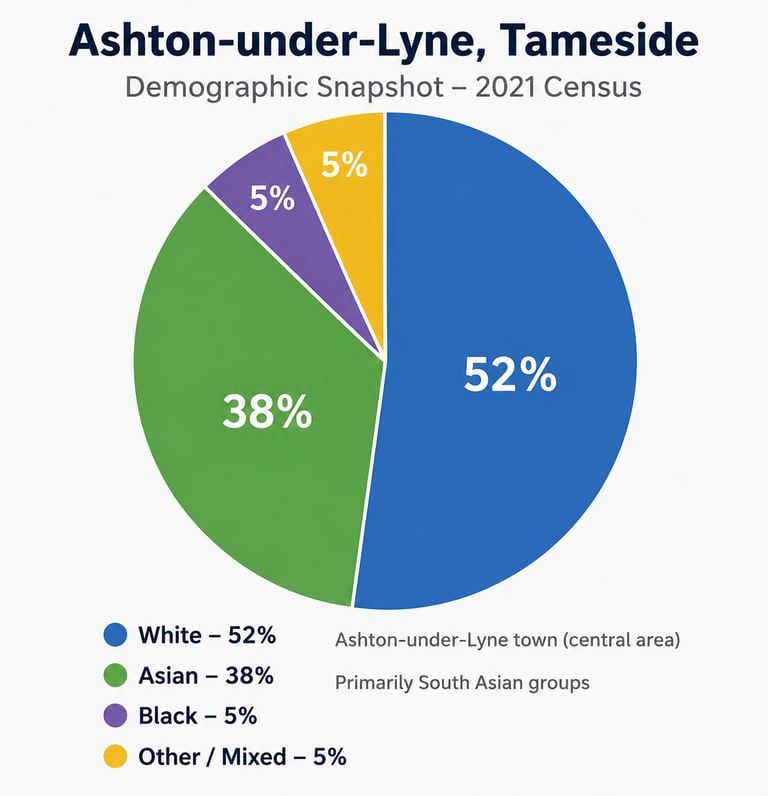
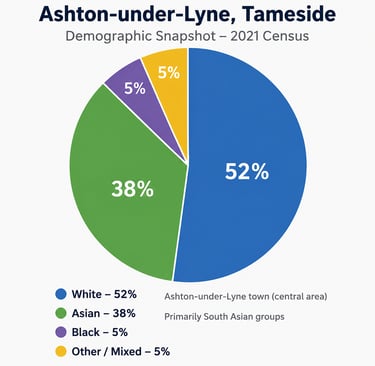
When that man stood in the library and claimed his "right" to abuse a non-white staff member, he wasn't speaking for Ashton.
In a town where nearly half of the central population belongs to an ethnic minority, his "version" of Britain is a fantasy.
To live in Ashton is to live in a diverse community; to reject that diversity is to reject the town itself.
Patriotism is Not Nationalism
This outburst wasn’t patriotism. It was a crude, hollow nationalism.
Patriotism is a quiet affection for your home; it’s wanting your community to be the best, most respectful version of itself.
Nationalism is the "toddler" version of that feeling. It’s defensive, exclusionary, and rooted in the idea that "owning" a piece of land gives you a license to be abusive.
When people feel emboldened by political rhetoric that frames neighbours as "others," they start to believe that Britishness is a shield for bad behaviour.
The Historical Truth
Britain was literally built on immigration and diversity because of the colonization we engaged in for centuries. We spent hundreds of years making the world "our country." You cannot extract resources and establish roots across the globe, and then act shocked when the world arrives on your doorstep. Our diversity is not an "add-on"—it is the direct result of the history books found on the very shelves that man was standing next to.
Protecting the "Third Place"
Our public spaces must be safe and respectful. They are the social glue of towns like Ashton. When we allow people to treat these spaces like their personal boxing rings or venting chambers, we lose the social contract that makes living together possible.
The man who shouted today isn't my countryman. He’s just a bully who never learned how to share. If we want to "take our country back," let’s start by taking it back from the loudmouths and the toddlers, and giving it back to the people who actually know how to behave in a library.